
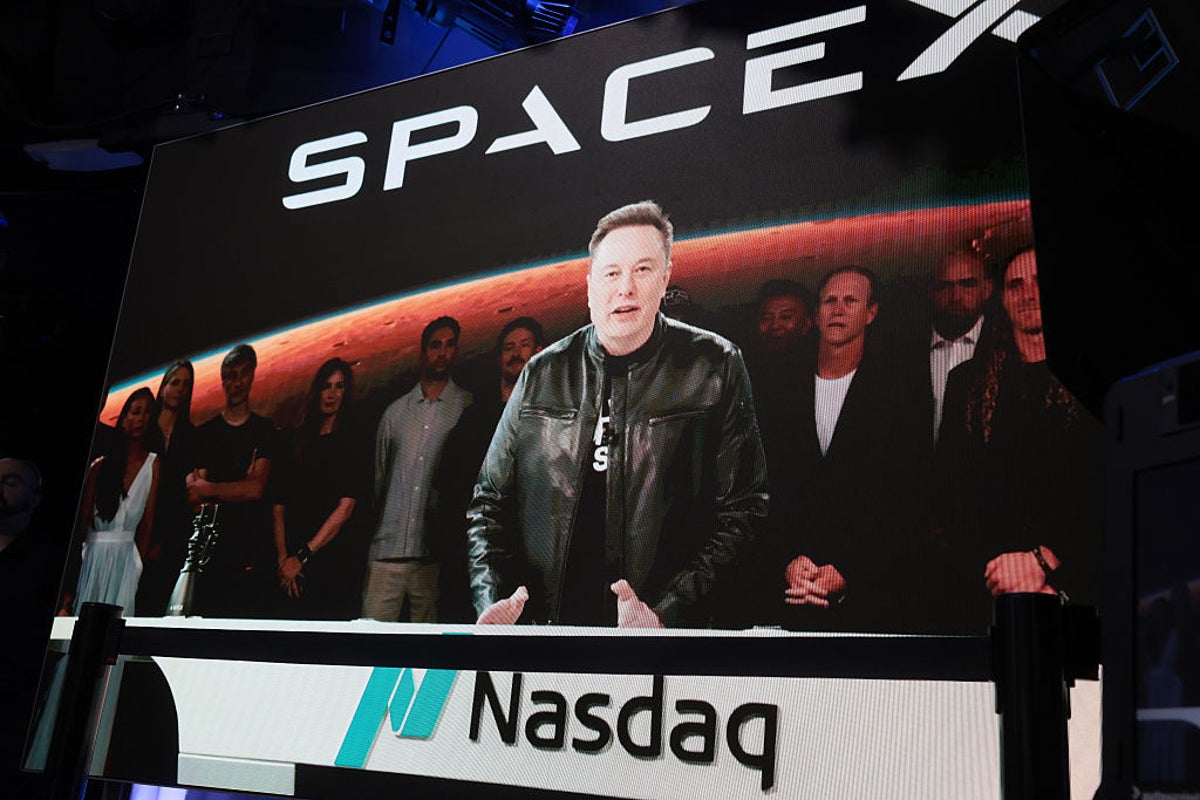
Elon Musk’s SpaceX is about to trigger a $4.3 billion buying frenzy
-
- 1

SpaceX’s addition to the Nasdaq 100 on Tuesday is expected to trigger billions of dollars in passive investment, as major Wall Street firms launched coverage of the rocket and satellite company with overwhelmingly bullish outlooks.
The company joins the tech-heavy index just 15 days after its June 12 stock market debut—one of the fastest inclusions ever—thanks to Nasdaq’s updated rules allowing newly listed companies to enter major benchmarks more quickly.
The move is expected to create huge demand for SpaceX shares. Index funds and ETFs tracking the Nasdaq 100, including Invesco’s QQQ and QQQM, must now buy the stock to match the index, while active fund managers are also expected to increase their holdings.
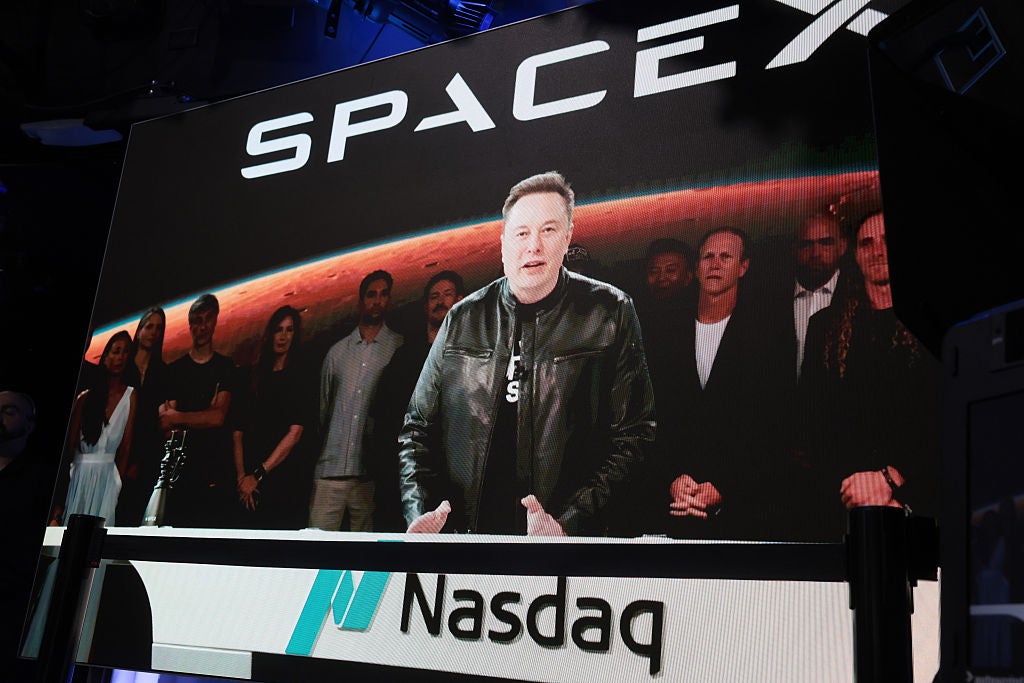
With more than $587 billion benchmarked to the Nasdaq 100, J.P. Morgan estimates the inclusion could generate $4.3 billion in passive inflows.
The end of the post-IPO quiet period has also unleashed a wave of analyst reports as Wall Street attempts to value SpaceX as a public company. Underwriters including Goldman Sachs, Morgan Stanley, BofA Securities, Citigroup and J.P. Morgan have all initiated coverage.
Morgan Stanley and Goldman Sachs both assigned their highest ratings. Morgan Stanley called SpaceX “AI’s final frontier,” while Goldman said the company is well-positioned to capitalize on opportunities in space, satellite connectivity and artificial intelligence, markets it believes could each be worth trillions of dollars within five years.
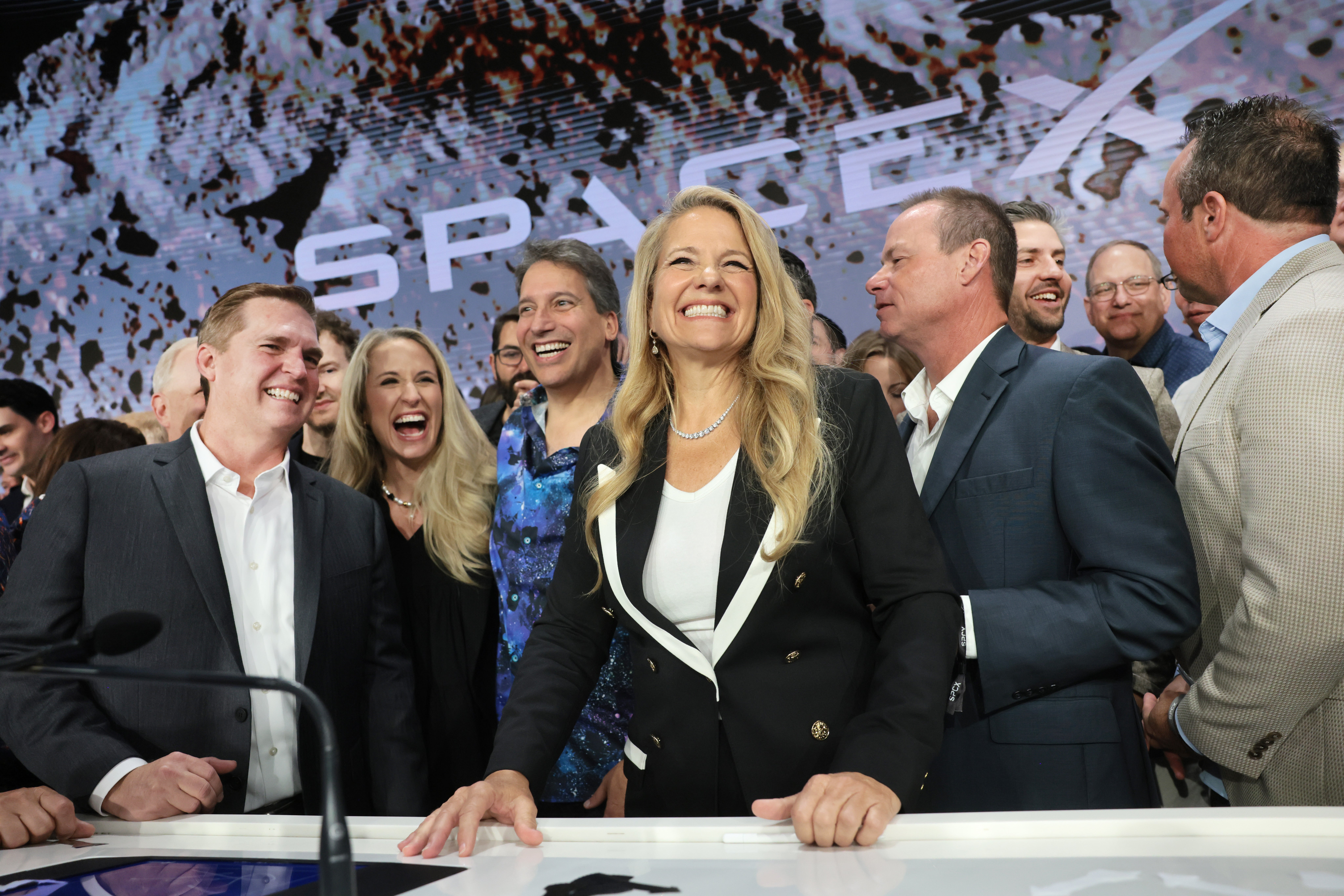
RBC, Bernstein and Stifel also launched coverage with bullish ratings, pointing to the potential of Starship, SpaceX’s fully reusable next-generation rocket. RBC described Starship as “the flywheel that powers SpaceX’s ambitions.” Oppenheimer initiated coverage last month with an “Outperform” rating.
Investors are increasingly betting that SpaceX can evolve into a hyperscale AI infrastructure company, using cash generated by its businesses to develop its Grok AI model to compete with OpenAI’s GPT and Anthropic’s Claude.
Analysts also expect Starlink to strengthen its dominance in satellite internet, while the company’s long-term ambitions depend heavily on Starship’s success.

Not everyone is convinced. Morningstar values SpaceX at about $780 billion, well below its current market capitalization of $2.1 trillion, citing uncertainty around its AI operations, including xAI and the social media platform X.
Now the sixth-largest publicly traded U.S. company, SpaceX has already been added to FTSE Russell’s U.S. indexes, giving funds such as the iShares Russell 1000 ETF exposure to what became the largest IPO in U.S. history.
S&P Global, however, declined to fast-track the company into the S&P 500, meaning it is unlikely to join the benchmark index for at least another year.
Since its market debut, SpaceX shares have risen more than 6%, though trading has been volatile.
